
Why EnerPHit?
Why we decided to follow PassivHaus principles
by Bec,
Jon and I are lucky: we get to work from home a few days a week, which makes going into the office a pleasure rather than an everyday chore. But anyone living in London this summer will know the dilemma hybrid workers mulled over. Work from home in a house that hit 30°C, or face the sweltering Tube and spend the day in an air-conditioned office?
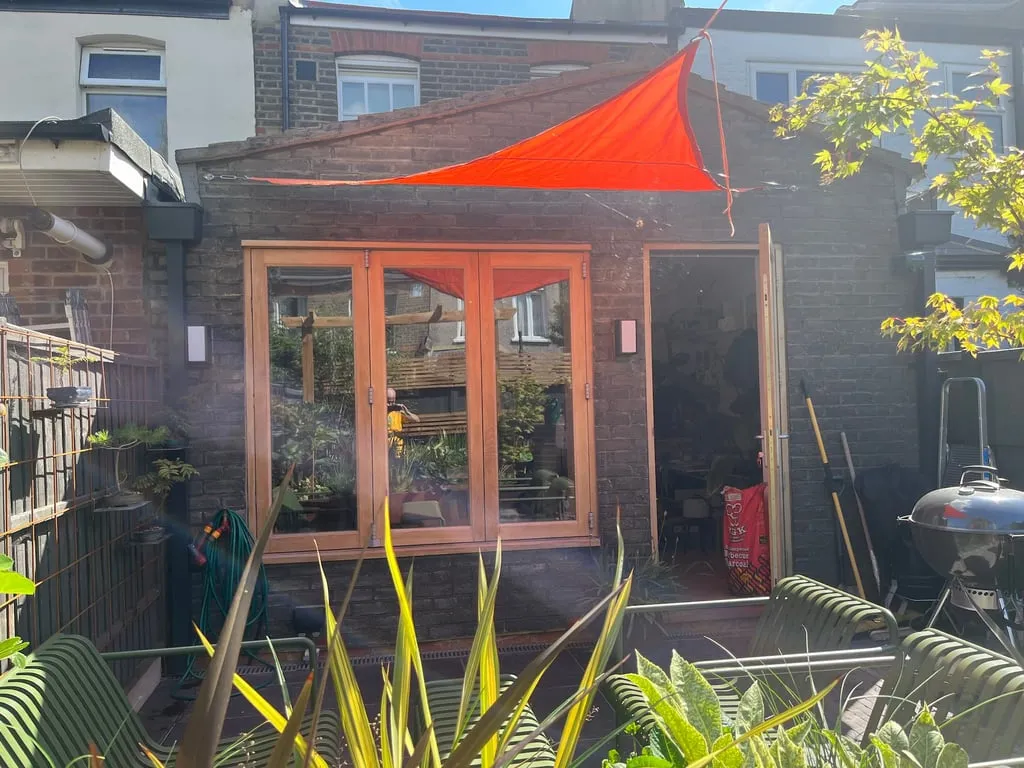
With back-to-back heatwaves, our terraced house became an oven. We did everything we could to keep it cool. We stuck foil to the outside of the downstairs windows, put up a sail to shade the back of the house, hung our roller blinds on the outside of the sash windows, and kept all the doors and windows shut. We still couldn’t keep it at a comfortable temperature, and at times it felt never-ending.
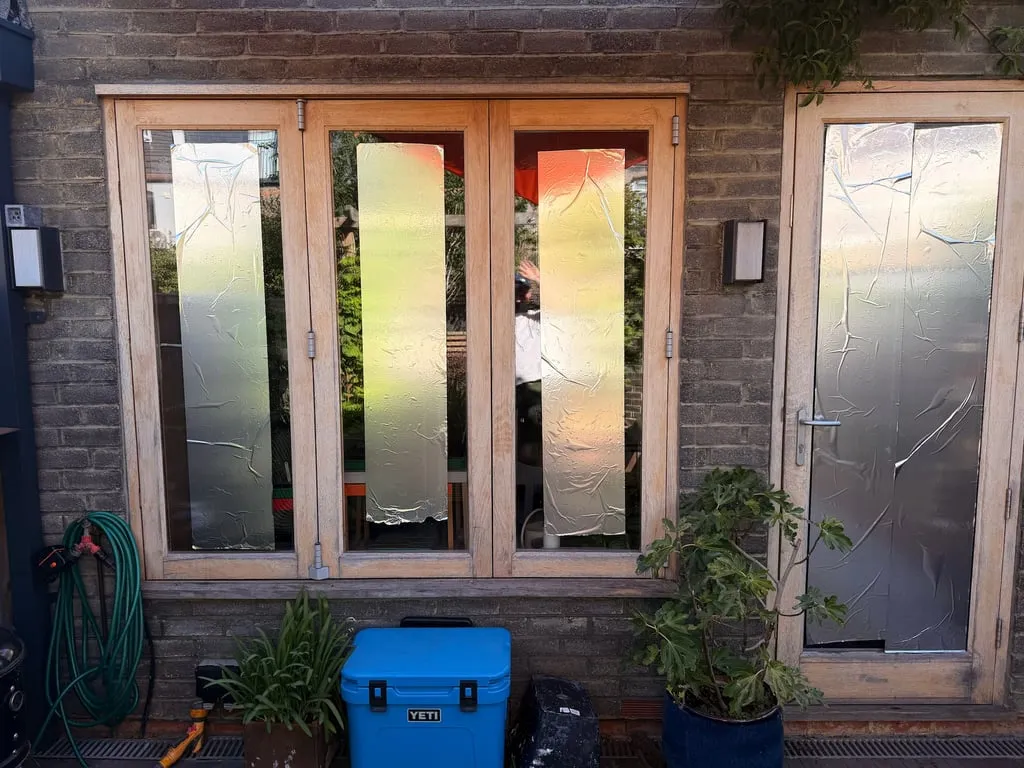
Knowing we’d hopefully be moving got us talking about what we could do differently in the new house. Should we consider air conditioning? The idea of flicking a switch and your bedroom instantly cooling is appealing. Using more energy and adding to the problem that’s making our summers hotter is less so.
I did a lot of reading about solar shading, something that seems widely used in Europe but is much harder to find in the UK, particularly for Victorian houses. I found Stay Shaded, who make awnings for sash windows. It’s such a good idea that I’d have bought them if we weren’t moving to a house with double glazing.
Solar shading led me to Passivhaus. It’s something that has always appealed, but it conjures up ultra-modern buildings and the freedom of building from scratch. I mentioned the heat to our architect Ulf in passing, and asked how we could make the new house more “passive”. He told me about EnerPHit, the Passivhaus standard for retrofitting existing buildings.
The Passivhaus Trust has some great resources on retrofit and EnerPHit, so I started their online introduction to Passivhaus to understand the criteria and principles. In essence, the criteria boil down to: very low heating demand, surface temperatures greater than 17°C, very airtight, continuous mechanical ventilation and limits on overheating. Two things really resonated with me:
- The house should be comfortable in every season: warm in winter and cool in summer, with limits on how much overheating is acceptable. A cooler house to start with would remove the need for air conditioning.
- It future-proofs the house. The rigour and testing mean the work has to perform as intended, so shoddy building work has nowhere to hide.
With a new-build Passivhaus, you design the building’s orientation, form and structure from the start. With an existing house, those things can’t be changed, at least not easily. EnerPHit is designed around those limitations, so its criteria are slightly more relaxed, but it’s still very demanding and very high performing.
We were sold on the dream. Having worked with builders who cut corners in the past, the idea of a standard that has to be met, and is tested, really appealed to my exacting mind. We could build those criteria in from the very beginning, rather than as an afterthought.
Then I spotted the Passivhaus summer open days. Islington Passivhaus wasn’t far from us, so Jon, Ulf and I booked a tour with its architect, Dominic O’Riordan, whose mum owns the house. They were both there on the day and talked us through building it, the challenges, and what it’s like to live in now.
We visited during yet another heatwave, and the house was noticeably cooler. They both said how great that had been over the last few months, helped by putting the bedrooms in the basement and keeping the living spaces up where they could make the most of the garden and the views.
The visit really cemented that we should go for a highly efficient house, and that working to a set standard like Passivhaus or EnerPHit holds you to account. On the flip side, it was terrifying: the cost, the attention to detail, the sheer amount of insulation. Islington Passivhaus was purpose-built. We were buying a semi-detached Victorian house, with all the restrictions and difficulties that come with it, and it felt overwhelming. But EnerPHit still felt like the right thing to aim for. Even if we fell short, surely we’d end up with something better than most new builds.
Dominic gave us one piece of advice that stuck. If you aim for the standard without going for certification, you’ll cut corners. You won’t mean to, but when something gets difficult and complicated, you’ll take the easier route. It’ll be small things here and there, but they soon add up.
So, in the way all the best decisions are made, with a lack of understanding and a naivety about how hard it will be, we decided EnerPHit certification was the right thing to do. Let’s go for it.

Loading comments…